






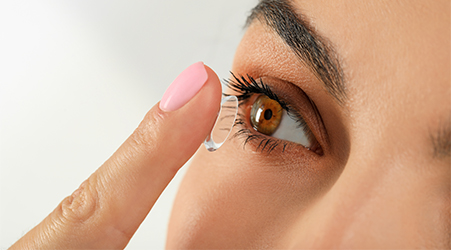


There are specialty contact lenses that deliver moisture to the surface of the eye. They’re called scleral lenses or bandage lenses.
If your eyelids are inflamed, this can prevent oil glands from secreting oil into your tears. Your doctor may recommend antibiotics to reduce inflammation.
These are eye drops to control inflammation on the surface of your eyes (cornea) using the immune-suppressing medication cyclosporine (Restasis) or corticosteroids.
If artificial tears don't help, another option may be a tiny eye insert. Once a day, you place the hydroxypropyl cellulose (Lacrisert) insert between your lower eyelid and your eyeball. It dissolves slowly, releasing a substance to lubricate your eye.
Available as pills, gel or eye drops, cholinergic (pilocarpine, cevimeline), these help to increase tear production.
For serious dry eye that’s not responding to other treatment, these eyedrops are made with a sample of your blood. It’s processed to remove the red blood cells and then mixed with a salt solution.
For mild cases of dry eyes, the best option is over-the-counter eye drops. Here are a few tips for selecting the right one:
- Low viscosity – These artificial tears are watery. They often provide quick relief with little or no blurring of your vision, but their effect can be brief, and sometimes you must use these drops frequently to get adequate relief.
- High viscosity – These are more gel-like and provide longer-lasting lubrication. However, these drops can cause significant blurring of your vision for several minutes. For this reason, high-viscosity artificial tears are recommended at bedtime.